United Kingdom / journal
Enterprise Data Security, Encryption & System Reliability Standards
UK guide to enterprise data security systems: process technology encryption, secure transaction protocols, data integrity frameworks and system reliability best practices.
In today’s digital world, organisations must protect data at every step — while it moves, when it is stored, and as systems process it. This article explains clear, practical standards for enterprise data security systems, process technology encryption, secure transaction protocols and data integrity frameworks. The aim is to help IT leaders, security teams and operations staff in the UK understand the building blocks for safe, reliable services without jargon.
Why enterprise data security systems matter
Enterprise data security systems are not just about locking files away. They combine technology, processes and people to prevent unauthorised access, ensure transactions are genuine, and keep data accurate. In regulated sectors across the UK, such as finance, healthcare and utilities, compliance with data protection law and industry standards is essential. Strong security reduces risk and makes systems more reliable for employees and customers alike.
Core components: encryption, protocols and integrity frameworks
Four technical areas form the backbone of modern enterprise security: encryption of data in motion and at rest, secure transaction protocols, integrity verification and system reliability engineering. Each area overlaps with the others.
1) Process technology encryption. This covers how data is encrypted while being processed and stored. Use proven algorithms such as AES-256 for stored data and TLS 1.2+ for data in transit. For specialised industrial control systems and process technology, consider lightweight authenticated encryption schemes that support constrained devices while maintaining confidentiality and integrity.
2) Secure transaction protocols. Whether it’s a payment, an API call or an inter-service message, transactions must be authenticated and authorised. Adopt mutual TLS for service-to-service connections, OAuth 2.0 and OpenID Connect for user and device authorisation, and message signing for asynchronous workflows. Ensure protocol implementations are up to date to avoid well-known flaws.
3) Data integrity frameworks. Integrity answers the question: is this data genuine and unchanged? Techniques include cryptographic hashing (SHA-2 family), digital signatures and ledger approaches for auditability. Use checksums for quick checks and cryptographic signatures when high assurance is needed. Integrity frameworks should be part of data pipelines, not an afterthought.

4) Encrypted data pipelines and data protection architecture. As data flows between systems, it must be protected end-to-end. Design encrypted data pipelines that minimise plaintext exposure, use transport encryption, and ensure access controls at each stage. A clear data protection architecture maps where data is stored, who can access it, and how it is secured.
Standards and best practices you can apply today
Adopt widely accepted standards rather than inventing bespoke solutions. Standards are tested and maintained by the community and help with compliance and interoperability. Practical steps include:
- Encryption standards: Use AES-256-GCM for most stored data and authenticated modes where possible. For web and API traffic, mandate TLS 1.2 or TLS 1.3 and disable weak ciphers and legacy protocols.
- Key management: Separate keys from encrypted data. Use Hardware Security Modules (HSMs) or cloud key management services to store and control keys. Implement rotation policies, least-privilege access and strict logging of key operations.
- Authentication and authorisation: Apply strong multi-factor authentication (MFA) for administrative access and privileged accounts. Implement least-privilege authorisation with role-based or attribute-based access control (RBAC/ABAC).
- Secure transaction protocols: Use mutual authentication for service connections, sign sensitive messages, and record receipts or acknowledgements for critical transactions. Protect APIs with rate limits, validation and input sanitisation.
- Data integrity: Use SHA-256 or stronger hashing for integrity checks, and combine hashing with digital signatures where non-repudiation is needed. Maintain immutable logs for audit trails; append-only ledgers or blockchain-like approaches can help for high-assurance requirements.
- Encrypted data pipelines: Encrypt data end-to-end where possible. Avoid decrypting data unnecessarily in intermediate services. Use tokenisation or anonymisation for non-essential sensitive fields.
- Monitoring and detection: Deploy centralised logging and SIEM solutions tuned to detect unusual access patterns, failed logins, sudden data exports and protocol anomalies. Regularly test detection rules and validate alerting paths.
Designing systems for reliability and resilience
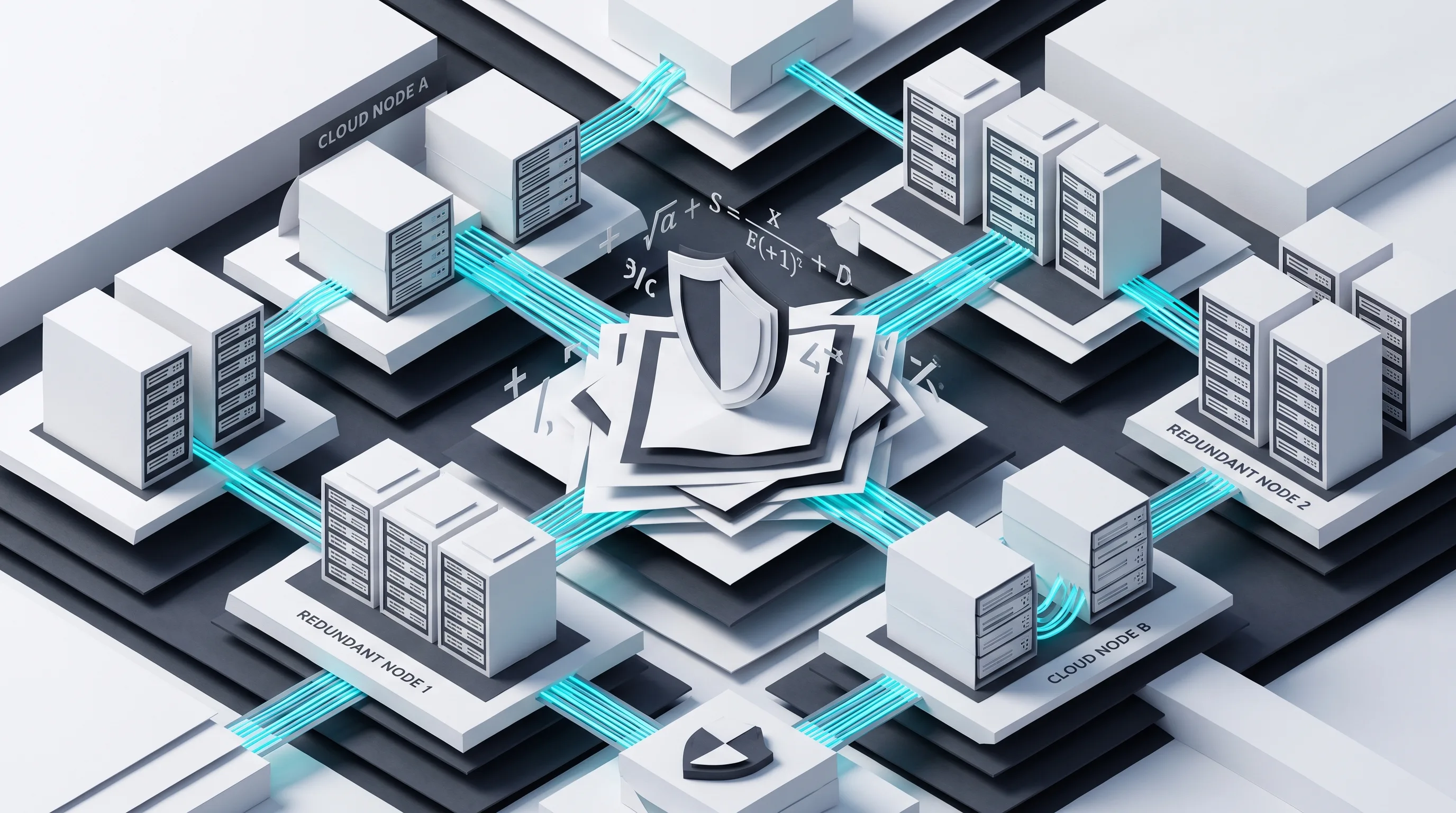
- Redundancy and failover: Run critical services across multiple availability zones or data centres. Use load balancers and health checks to route traffic away from failing nodes. Ensure encryption keys and key stores are replicated securely to avoid single points of failure.
- Backup and recovery: Maintain encrypted backups with tested recovery procedures. Backups must be protected by separate credentials and access controls. Test recovery regularly to ensure you can restore data and services quickly after an incident.
- Secure development lifecycle: Integrate security into development from planning to deployment. Use threat modelling, code reviews, static and dynamic analysis, and dependency scanning. Automate security tests in CI/CD pipelines and require release gates for high-risk changes.
- Fault injection and chaos testing: Periodically test how services behave under failure conditions. Chaos engineering helps teams find and fix brittle designs before they cause outages. Simulate network partitions, key store failures and latency spikes with safeguards in place.
- Operational runbooks: Create clear runbooks for common incidents such as key compromise, certificate expiry, and data leaks. Staff should know who to call, how to isolate systems and how to communicate with regulators and customers when needed.
Practical implementation checklist and roadmap
Use a phased approach. Start by mapping critical data and systems, then apply controls that give the best risk reduction first.
Phase 1 — Assess and map: Inventory data assets, data flows and systems. Identify where sensitive data resides and who accesses it. Classify data by sensitivity and legal requirements.
Phase 2 — Immediate controls: Apply strong transport encryption (TLS), enforce MFA, patch critical vulnerabilities and centralise logging. Configure network segmentation to limit blast radius.
Phase 3 — Harden and automate: Implement key management, encrypt data at rest, adopt RBAC, and move to encrypted data pipelines. Automate backups, rotations and certificate renewals.
Phase 4 — Test and validate: Run tabletop exercises, incident response drills and recovery tests. Use penetration testing and red-team exercises to find gaps.

Phase 5 — Maintain and improve: Monitor threats, review controls periodically and adapt to new regulations or technology. Keep documentation, training and supplier assessments up to date.
People, process and technology — balancing the three
Technology alone won’t secure an enterprise. Processes must define how technology is used, and people must be trained to follow them. Make security policies clear and practical. Use short, role-specific training rather than long manuals, and run regular simulated phishing and response drills. Ensure procurement includes security requirements for third-party systems and that contracts specify responsibilities for data protection and incident reporting.
Remember to align security efforts with business goals. Good security enables new services safely and reduces friction for lawful use. Include stakeholders from legal, compliance, operations and business units when designing controls so solutions are usable and effective.
Enterprise security: common pitfalls to avoid
- Rolling your own crypto: Avoid designing bespoke encryption schemes. Use standard libraries and vetted algorithms.
- Single points of failure: Central stores without redundancy or weak key protection create systemic risk.
- Overcomplicated access: Too many temporary credentials or unclear ownership leads to unmanaged access and risk.
- Lack of monitoring: You cannot defend what you cannot see. Centralise logs and test alerts regularly.
- Ignoring supply chain risk: Third-party services can expose you. Assess and monitor suppliers for security hygiene.
FAQ
1. What is the difference between encryption at rest and encryption in transit?
Encryption at rest protects stored data on disks or databases, while encryption in transit protects data as it moves across networks. Both are necessary: in transit prevents eavesdropping, and at rest prevents unauthorised access if storage is stolen or compromised.
2. How do encrypted data pipelines help with privacy?
Encrypted data pipelines reduce the number of systems that see plaintext data. By encrypting data end-to-end and limiting where decryption occurs, you lower exposure, meet privacy rules more easily and reduce the scope of security audits.
3. How often should cryptographic keys be rotated?
Rotation frequency depends on risk, but a common approach is to rotate keys annually or whenever a key may be exposed. High-value keys and certificates used for signing or authentication may require more frequent rotation and strict access controls.
4. What role does system reliability engineering play in security?
System reliability engineering ensures systems continue to function under stress and failure. Reliable systems reduce the chance that security controls fail when they are most needed. SRE practices like redundancy, monitoring and testing support both availability and security.
5. Which standards should UK enterprises follow?
Follow international standards like ISO 27001 for information security management, NIST guidance for cybersecurity and UK-specific regulations such as the Data Protection Act 2018. Industry frameworks and PCI DSS apply where relevant.
6. How do I start if my organisation has limited budget?
Prioritise: map critical data, enforce TLS, enable MFA, and centralise logging. These steps give high risk reduction at relatively low cost. Build a roadmap to invest in key management and automation over time.